The Hidden Problem in Overwatch: How Team Comms and “Tempo Desync” Turn Ranked Fights Into Coin Flips
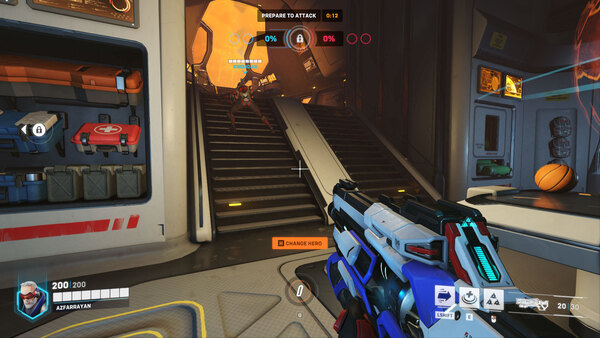
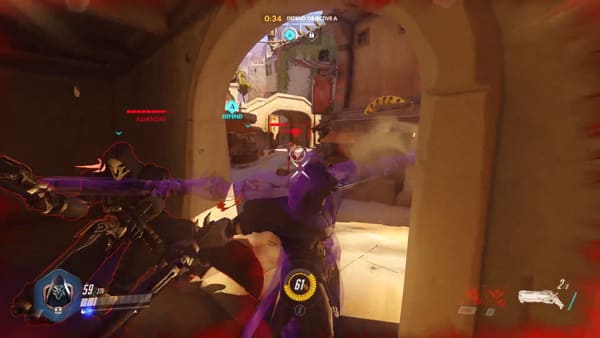
Overwatch is often discussed as a game of aim, hero picks, and map control. But if you watch enough high-level ranked streams or play enough matches yourself, you notice a different pattern: many fights do not fail because a team was “out-skilled” in the raw sense. They fail because the team was never playing together at the same tempo.
This is what I’ll call tempo desync—a specific, repeatable issue where teams don’t align on timing windows: when to contest space, when to commit to a dive or a brawl, when to use cooldowns, and when to regroup. The result is surprisingly consistent: even when individual players make “reasonable” plays, the team’s engagements become unstructured. You get staggered ults, wasted defensive cooldowns, fights won in one room but lost in the next, and those infuriating moments where it feels like everyone is doing something correct… just at the wrong time.
This article is not a general guide like “communicate more” or “play together.” Instead, we’ll go deep into one tightly scoped problem: tempo desync caused by miscommunication about engagement timing, how it emerges from specific behaviors in Overwatch, how it shows up in match patterns, and how you can fix it with concrete tools and training drills. We’ll cover how to define tempo, how to label windows, what to say (and what not to say), and how to restructure your decision-making so your team stops turning ranked fights into coin flips.
1 Start-of-Match: The First Tempo Mistake Is Not Composition, It’s Cadence
<p>Paragraph</p>
The first tempo desync often appears before anyone even sees combat. Teams choose a hero and swap decisions, but they rarely agree on a cadence for how the frontline will be approached. In other words: even if you have the “right” composition on paper, your team can still enter fights at mismatched times.
A typical symptom is this: one player expects to poke and reset for supports, while another expects to “take early space” immediately. Both are acting on a logic they believe is correct. But the match requires them to share a single plan for the first 20–30 seconds of engagement. Without it, the team starts the fight with different expectations for commitment timing, and that mismatch cascades into everything after.
<p>Paragraph</p>
Tempo desync at the start-of-match can be traced to three micro-failures:
- nobody defines who initiates the engagement window
- nobody defines how long the team will hold before committing
- nobody defines what triggers escalation (enemy cooldowns burned, space achieved, etc.)
You do not need perfect callouts. You need a shared timer logic.
<h3>Key idea: “Plan the first fight’s commitment window”</h3>
If your team cannot answer “when do we commit and for how long,” you’re already losing tempo alignment.
2 Midfight Drift: How People “React” Instead of “Step Together”
<p>Paragraph</p>
Tempo desync doesn’t stay only at the beginning. It evolves during the fight itself. A major driver is reactive play—when players individually respond to enemies rather than responding to the team’s engagement plan.
Imagine your team is pushing a choke. The tank is slowly advancing with support resources. DPS players see an off-angle and shoot a target. A flanker gets a pick opportunity. Everyone is making a decision based on local information. But the team has no common rule like: “We push together until their first defensive cooldowns are burned.” If nobody defines that rule, each player effectively becomes a separate timeline.
<p>Paragraph</p>
Once those timelines diverge, the fight becomes a series of partial commitments. You end up with:
- a tank that committed without follow-up
- DPS that are far out of sync with the tank’s survivability window
- supports who used resources on one lane while the real fight moved elsewhere
- defenders who survive longer than they should because attackers never layered cooldowns simultaneously
<h4>Tempo mismatch creates “false wins” and “false losses”</h4>
A pick that arrives too late does not win the fight. A stagger that happens on the wrong side does not matter. The win condition in Overwatch is not a moment; it’s the *sequence* of moments.
3 Cooldown Windows: The Most Common Communication Failure Is Timing, Not Content
<p>Paragraph</p>
Many comms focus on events: “Zarya used bubble,” “Mercy is rezzing,” “Hog has hook.” These are useful. But tempo desync usually happens when comms omit the timing layer: what cooldown was used and why your team should respond now.
A teammate can hear “bubble used” and still not know whether the team should:
- commit immediately
- wait for a different ability to come back
- reposition for a different angle
- or protect a dive target for the next 10 seconds
Without that “now vs soon vs later” framing, comms become trivia instead of strategy.
<p>Paragraph</p>
The fix is to attach a decision label to each callout:
- Commit now (the enemy has removed their defensive response)
- Bide (enemy still has enough safety; do not overextend)
- Reset (you must disengage before your resources become too low)
- Save (do not waste your cooldowns on the wrong target)
<h3>Example: turning an event into a tempo instruction</h3>
Bad: “Baptiste used Immortality Field.”
Better: “Baptiste used Immortality. Commit now—dump damage before it’s gone.”
Even if your team is not perfectly coordinated, labels help unify the timing model.
4 The Tempo Geometry of Maps: Why “Same Fight” Isn’t the Same Fight
<p>Paragraph</p>
Overwatch maps are not flat. They have travel times, line-of-sight breaks, cover density, and chokepoints. Tempo desync becomes worse when players ignore map geometry and still assume their plays “should line up.”
For example, a team may win an engagement on an open lane but then arrive at the next angle out of order. A DPS who took the off-angle and got one pick could believe their team should follow immediately. But if the off-angle player pathing is longer or riskier, the tank may actually be in a different phase of resource availability when the next wave forms.
<p>Paragraph</p>
Tempo is affected by:
- distance between spawn and the first contested area
- how long it takes supports to establish line-of-sight
- whether a flanker can rotate without crossing lethal zones
- whether your comp has a “slow walk” ability or must use burst commit
<h4>Practical implication: define “arrival order”</h4>
If your team’s roles systematically arrive at fights at different times, then comms must reflect *arrival order*, not just “go in.”
A practical example:
- Tank commits when supports are in position
- DPS commits when supports are aligned
- Supports commit cooldowns only when the tank’s frontline is within “range to matter”
5 Rank-Specific Behavior: Why Tempo Desync Is So Common in Mid Elo
<p>Paragraph</p>
Tempo desync thrives in mid ranks because players have enough game sense to think “I know what should happen,” but not enough consistency to execute synchronized timelines. This often turns into the belief that “communication is the solution.” Communication helps, but tempo desync is deeper: it’s about decision-making frameworks under uncertainty.
When your team does not fully trust each other’s timing, players hedge. Hedging creates staggered commitments. Staggered commitments create partial trades. Partial trades feel like “we should’ve won,” which then triggers even more reactive individual play.
<p>Paragraph</p>
Common mid-rank tempo patterns:
- DPS players shoot at targets to “make progress” while the team expects a wait window
- tanks push first because they want to force space, even when supports are not ready
- supports heal whoever is closest, not whoever is required for the next commitment
- nobody calls “we’re going to commit in 3…2…1,” so players mis-time cooldowns and ults
<h3>Tempo desync becomes a feedback loop</h3>
Mistimed commitment causes loss. Loss causes fear of wasting cooldowns. Fear increases hedging and reduces decisiveness. Reduced decisiveness worsens tempo alignment.
6 A Diagnostic Method: Spotting Tempo Desync Using Fight Logs You Can Remember
<p>Paragraph</p>
You can diagnose tempo desync without advanced analytics. You only need consistent observation after matches. The key is to focus on sequence errors, not just “who died first.”
Pick 5 fights from a loss and answer these questions in your own words:
- Who initiated the engagement
- When did the team actually commit
- Did defensive cooldowns land before or after commit
- Did supports have line-of-sight at the commit moment
- Were ults traded in the same “phase” of the fight or after reset
<p>Paragraph</p>
Then mark the fight as tempo-synced or tempo-desynced. A tempo-synced fight feels like this:
- everyone spends cooldowns in a tight window
- pick opportunities appear as a consequence of commitment
- after the fight, you understand why it ended
A tempo-desynced fight feels like:
- people used resources separately
- ults were used without a shared purpose
- the team repeatedly re-engaged from “wrong positions” after staggered resets
<h4>What to look for: the “cooldown inversion”</h4>
Cooldown inversion is when your team uses defensive tools too early, or offensive tools too early, because players are responding to different moments. If that happens repeatedly, tempo desync is likely the root.
7 Fixing It With Communication Templates: Don’t Call Events, Call Windows
<p>Paragraph</p>
To fix tempo desync, your comms need to be more like a traffic signal system than a stream of updates. The goal is to remove ambiguity about the timing of commitment.
Instead of:
- “Rein charge”
- “I’m one HP”
- “They’re pushing”
Use:
- “Wait for my call—30% HP frontline”
- “Commit window: 3 seconds after their first defensive cooldown”
- “Supports set—move on my next ping”
This forces the team to anchor on a shared reference point.
<p>Paragraph</p>
Here are practical communication templates you can adapt. The bracketed parts are variables your team must agree on in advance.
<h3>Template set for tempo control</h3>
- “Hold. Do not commit until [enemy cooldown] is used.”
- “Commit now when [tank reaches cover] and [supports are in LOS].”
- “We reset after [first ult exchange]. No second push.”
- “If you get isolated, fall back instantly—do not chase past the commit window.”
<h4>Why templates work</h4>
They reduce cognitive load. Players don’t have to interpret the meaning of your callouts mid-fight; they already know how to behave when the signal appears.
8 Role Responsibility: Tempo Is Shared, but Execution Has Owners
<p>Paragraph</p>
A major reason tempo desync persists is unclear responsibility. Teams often treat tempo as “everyone’s job,” which means nobody’s job. You need role owners who drive the timeline.
Common solution pattern:
- Tank drives engagement timing (move/hold/commit)
- Supports drive resource timing (when to spend cooldowns)
- DPS drive target prioritization inside the commit window (what to focus while the timing is correct)
<p>Paragraph</p>
If those responsibilities are blurred, then each player tries to control tempo personally. That creates conflict: two tanks push at different times, supports spend to cover random lanes, DPS trade picks outside the team’s commit window.
<h3>Define ownership without micromanagement</h3>
Ownership does not mean yelling. It means each role has a consistent decision trigger.
Example triggers:
- Tank: “When I reach cover and can’t be stunned, we commit.”
- Support: “When our tank is stable, we spend cooldowns.”
- DPS: “During commit, we focus the target that enables the dive/peel chain.”
9 Ult Economy and Tempo: Why Your Ults Feel “Wasted” Even When They Kill
<p>Paragraph</p>
One of the most demoralizing experiences in Overwatch is watching ults “work” mechanically—getting kills—yet still losing the fight. That usually isn’t because the ult was bad. It’s because it was used in the wrong tempo phase.
A tempo-desynced team may:
- pop ult before the team is positioned
- trade ults too early, allowing enemies to regain defensive resources
- wait too long to ult and then find the enemy has already stabilized
- use ult to chase instead of to create a commitment window
<p>Paragraph</p>
So the issue becomes: your team’s ult economy is not just resource management; it’s timing coordination. Ults are basically “you are allowed to be late” buttons—late ults can still be good, but only if the team’s fight phase is aligned.
<h4>Ult phase labels</h4>
Agree on terms like:
- **Threat ult** (forces enemy to respond defensively)
- **Finish ult** (ends the fight after enemy defenses are depleted)
- **Reposition ult** (changes where the fight happens)
- **Panic ult** (used to stop immediate collapse)
When your team can label your ult’s intent, you reduce tempo confusion.
10 Training Drills to Eliminate Tempo Desync in Real Matches
<p>Paragraph</p>
Fixing tempo desync requires practice, not just better communication. You must drill your team behavior so timing becomes automatic. You can do this even without a full organized team by creating repeatable match patterns.
Here’s a set of drills you can run:
- a “commit ladder” drill in quickplay
- a “cooldown label” drill in custom games with friends
- a “reset discipline” drill when you lose a fight
<p>Paragraph</p>
Drill 1 Commit Ladder
Play a match where your team’s only goal in the first phase is to create one clean commitment window.
- Rule: nobody initiates the second push until all players are within range
- Rule: supports must have LOS before commit
- Rule: tanks commit only once, unless hard reset is called
After each fight, ask: Did we all commit within the same window?
Drill 2 Cooldown Label
In comms, every time a major defensive cooldown is used, you must also state the decision label:
- “Commit now”
- “Bide”
- “Reset”
Run only 2–3 fights with this rule. If people can’t label decisions, tempo desync will persist.
Drill 3 Reset Discipline
When your team loses the frontline:
- Rule: do not chase past the reset point
- Rule: only regroup at the agreed “safe anchor” location
- Rule: re-engage only after supports confirm readiness
This stops “fight spirals” where staggered deaths create chaos and everyone compensates with solo plays.
<h3>Small checklist before every engagement</h3>
- Tank positioned where supports can see
- Team knows who initiates
- Decision label exists: commit now or bide
- Target focus set for the first 5 seconds
Lists like this sound basic, but they directly attack tempo uncertainty—the root of tempo desync.
Conclusion
Tempo desync in Overwatch is a specific, mechanical failure mode: teams do not share engagement timelines. It isn’t merely “bad communication” or “no teamwork.” It’s a mismatch of commitment windows—when players react to local information instead of stepping through the fight as one synchronized sequence.
The fixes are equally specific: define commitment windows, label decision timing (“commit now” vs “bide”), assign lightweight role ownership, diagnose sequence errors after losses, and practice with drills that force your team to commit, reset, and ult in the same phases. When you eliminate tempo ambiguity, you don’t just improve coordination. You also stop turning winnable fights into random outcomes where individual skill is irrelevant because the fight sequence never forms.
In short: Overwatch isn’t only about who can kill. It’s about who can make the team’s timeline line up.