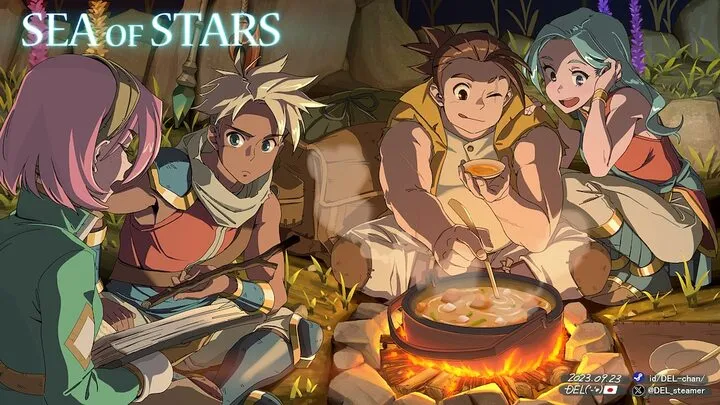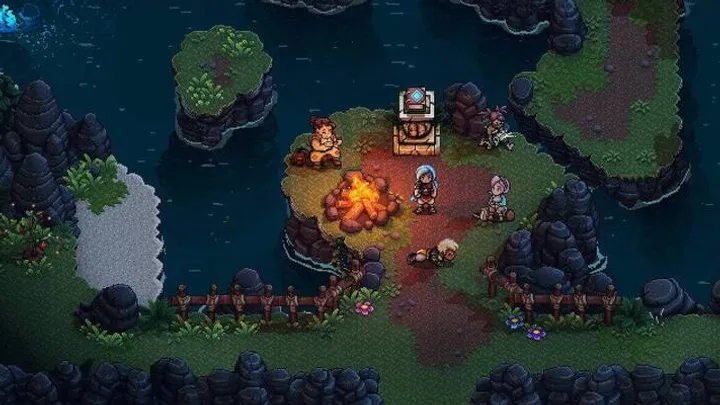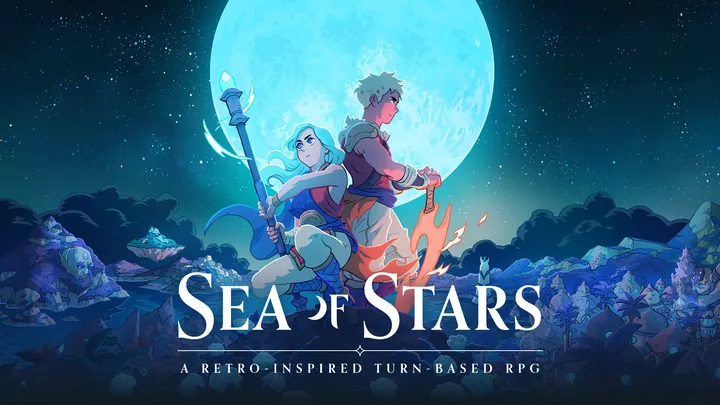

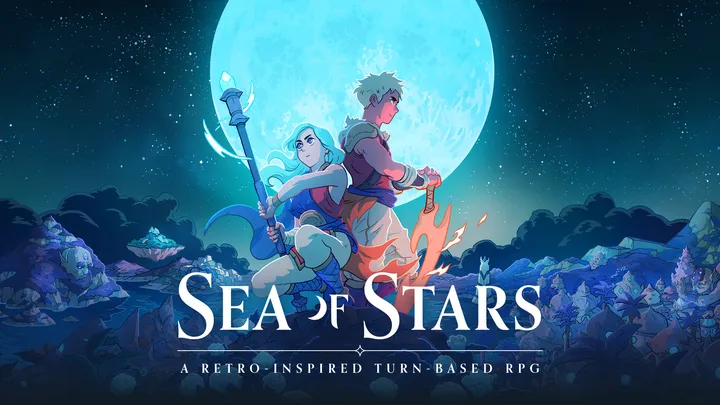





In Sea of Stars, the most compelling narrative thread is not simply the journey across islands or the battle against cosmic forces—it is the philosophical and symbolic weight of Solstice power. The protagonists, Valere and Zale, are not just heroes; they are embodiments of Moon and Sun, trained from childhood to become Solstice Warriors capable of confronting the monstrous Dwellers.
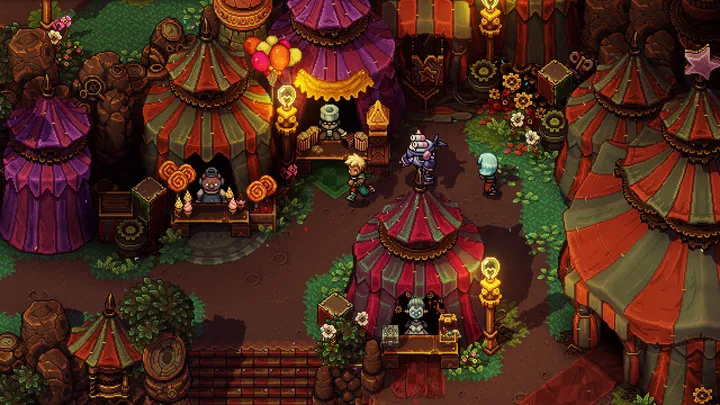
This article explores a specific and deeply layered topic: the duality of Sun and Moon as a narrative system, and how it shapes identity, time perception, emotional development, and ultimately sacrifice. Rather than treating Solstice power as a gameplay mechanic, we examine it as a narrative framework that evolves across the game’s timeline—from childhood training to the final confrontation with cosmic entities.
The Origin of Solstice Power: A World Divided by Light and Darkness
The Cosmic Foundation
The concept of Solstice power originates from a world governed by celestial cycles. The Sun and Moon are not passive elements; they actively shape reality, influencing both natural phenomena and supernatural forces.
Solstice Warriors are born from this duality. Their existence represents a balance between opposing energies, making them uniquely capable of confronting threats that ordinary beings cannot.
The Role of the Dwellers
The primary antagonistic forces, known as Dwellers, exist outside the natural balance. They disrupt the harmony between Sun and Moon, feeding on imbalance and chaos.
Key characteristics of Dwellers include:
- Resistance to conventional attacks
- Dependence on environmental corruption
- Vulnerability only to Solstice-aligned power
This establishes Solstice Warriors as necessary rather than optional.
Childhood Training: Identity Shaped by Expectation
The Loss of Ordinary Life
From an early age, Valere and Zale are removed from normal society and trained in isolation. This separation is not just physical—it is psychological.
They are taught to suppress individuality in favor of purpose. Their identities become defined by their roles as Moon and Sun.
Discipline Over Emotion
Training emphasizes control, repetition, and discipline. Emotional expression is often discouraged, as it is seen as a distraction from their mission.
This creates a tension between:
- Personal identity
- Assigned destiny
The characters begin their journey already shaped by expectations they did not choose.
The Emergence of Individuality
Breaking the Symmetry
As the story progresses, Valere and Zale begin to diverge in personality and perspective. While they are trained as complementary forces, their experiences lead them to interpret their roles differently.
This divergence is subtle but significant.

Emotional Development
Interactions with other characters introduce new emotional dimensions:
- Friendship challenges their isolation
- Humor disrupts their rigid discipline
- Conflict forces self-reflection
These experiences begin to reshape their understanding of what it means to be a Solstice Warrior.
Solstice Power as a Living Force
Beyond Elemental Magic
Solstice power is not simply a combination of light and dark—it is a dynamic force that responds to context, emotion, and timing.
Its effectiveness depends on:
- Alignment with celestial cycles
- Synchronization between Sun and Moon
- Emotional state of the user
The Mechanics of Balance
The game subtly reinforces that imbalance weakens Solstice power.
Indicators of imbalance include:
- Failed synchronization attacks
- Reduced effectiveness against Dwellers
- Narrative tension between characters
Balance is both a mechanical and narrative requirement.
Time as a Narrative Element
The Influence of Day and Night
Time in Sea of Stars is not static. The transition between day and night affects both gameplay and narrative tone.
Day represents clarity, action, and outward expression. Night represents introspection, mystery, and internal conflict.
Temporal Symbolism
The cycle of time mirrors the characters’ development:
- Day → Confidence and action
- Night → Doubt and reflection
This duality reinforces the central theme of balance.
The Role of Companions in Breaking Duality
Introducing External Perspectives
Companions serve as a counterbalance to the rigid duality of Sun and Moon. They bring perspectives that challenge the binary structure of Solstice ideology.
Expanding the Narrative Framework
Through companions, the story introduces complexity beyond duality:
- Moral ambiguity
- Emotional nuance
- Alternative forms of strength
This expansion prevents the narrative from becoming overly simplistic.
Confronting the Dwellers: Power Meets Reality
The Limits of Training
When facing Dwellers, Valere and Zale confront the limitations of their training. Theory meets reality, and not all situations can be solved through discipline alone.
The Cost of Power
Each confrontation carries consequences:
- Physical exhaustion
- Emotional strain
- Increased self-doubt
Victory is never without cost, reinforcing the weight of their role.
The Collapse of Certainty
Questioning the System
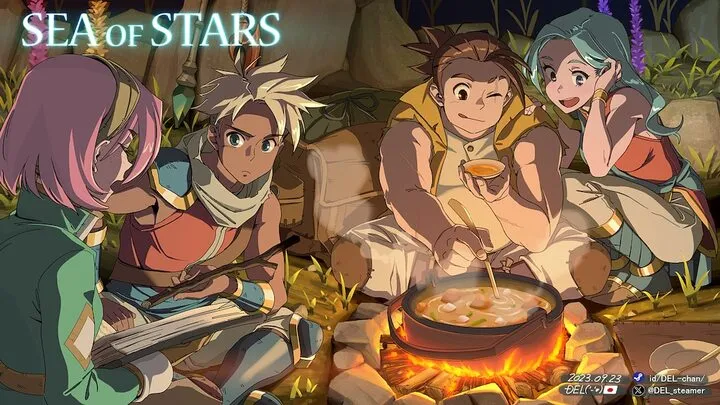
As the narrative progresses, the characters begin questioning the very system that created them.
Key questions include:
- Is the Solstice system truly just?
- Are they tools or individuals?
- What defines their worth beyond their role?
The Fragmentation of Identity
This questioning leads to a fragmentation of identity. The balance between Sun and Moon becomes unstable, reflecting internal conflict.
The Final Convergence
Unity Through Understanding
The climax of the narrative is not just a battle—it is a convergence of identities. Valere and Zale must reconcile their differences to achieve true balance.
Redefining Solstice Power
At this stage, Solstice power evolves:
- From imposed identity to chosen purpose
- From rigid structure to adaptive force
- From duality to unity
This transformation represents the culmination of their journey.
Aftermath: A World Beyond Duality
The End of the Cycle
Following the final confrontation, the world begins to move beyond the strict binary of Sun and Moon.
The balance is no longer maintained through separation, but through integration.
A New Identity
Valere and Zale emerge not just as Solstice Warriors, but as individuals who have redefined their roles.
Their journey reflects a broader theme: identity is not given—it is formed through experience.
Conclusion
Sea of Stars uses the duality of Sun and Moon as more than a thematic device—it becomes the structural foundation of its narrative. Through the journey of Valere and Zale, the game explores how identity, time, and power are shaped by both external expectations and internal growth.
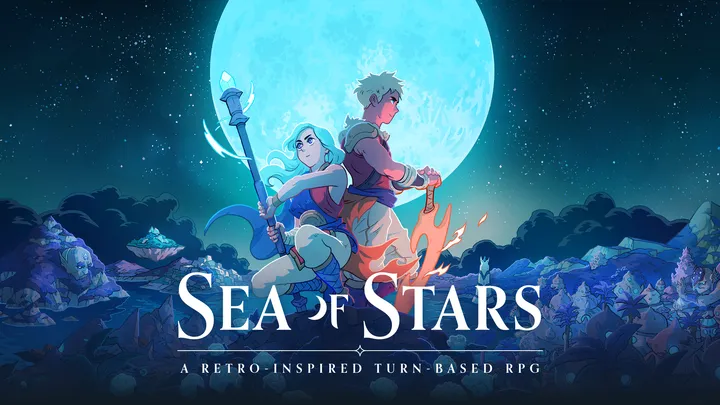
By gradually deconstructing the rigid system of Solstice training and replacing it with a more nuanced understanding of balance, the narrative achieves a rare depth. It transforms what could have been a simple good-versus-evil story into a meditation on purpose, individuality, and the meaning of harmony.
In the end, the true power of Solstice Warriors is not their connection to celestial forces, but their ability to reconcile opposing aspects within themselves—and choose who they become.